Building Agentic AI Using Open Source Models
Unlock the power of Agentic AI with our hands-on program. Gain the practical knowledge and experience to automate complex tasks and design intelligent systems from the ground up. You'll master the core concepts of Transformers and dive into building with leading tools like LangChain, LlamaIndex, and open-source LLMs. Learn to architect systems for Retrieval-Augmented Generation (RAG) and multi-agent collaboration, moving from theory to real-world deployment. You’ll be equipped to design, build, and deploy autonomous systems that solve real-world problems.
Learning Outcome
- Explain Agentic AI and Transformer fundamentals.
- Identify and use major open-source LLMs and agent frameworks.
- Design and implement autonomous agents with perception, reasoning, and memory.
- Build RAG pipelines for context-aware decision-making.
- Develop multi-agent systems with collaboration and tool/API integration.
- Deploy and automate end-to-end agentic AI projects using open-source tools.
Learning Objective
- Learn to design, build, and deploy autonomous, goal-driven AI systems using leading open-source large language models (LLMs) and generative AI frameworks.
- Explore Transformer fundamentals—from tokenization and embeddings to self-attention and memory—and gain experience with major open-source LLMs and agent frameworks like LangChain, AutoGPT, and LlamaIndex.
- Dive into building autonomous agents, Retrieval-Augmented Generation (RAG) pipelines, multi-agent collaboration systems, and the integration of external tools and APIs.
- Through applied lectures, exercises, and mini-projects, learn to build fully functional agentic AI that can perceive, reason, plan, act, and automate complex tasks in real-world environments.
Course Structure
-
Introduction to Agentic AI and Transformer Foundations
Introduction to Agentic AI, starting with a deep dive into the Transformer architecture—covering self-attention, embeddings, and tokenization—and exploring how it enables reasoning and memory. Participants will gain an overview of leading open-source LLMs, such as LLaMA and Falcon, and learn to work with frameworks like LangChain and LlamaIndex. The hands-on component includes setting up a Python environment and executing practical exercises to run an LLM locally and master basic prompt-response cycles, providing foundational skills for building autonomous systems. -
Foundations of Autonomous Agent Design and GEN AI Tool-Calling
Dives deep into constructing intelligent agents, exploring core components like Perception, Reasoning, Action, and Memory, alongside skills for task decomposition and planning. You’ll get hands-on with LangChain and LlamaIndex, learning to connect agents to external tools and APIs via tool-calling. The curriculum also covers best practices for agent orchestration, safety measures, and ethical AI design using open-source frameworks. Through hands-on exercises, you’ll build a rule-based Python agent, implement a multi-step task planner with LangChain, and create a functional agent using tool-calling for tasks like search or calculation. -
Integrating Open-Source LLMs with RAG Pipelines
Learn how to apply AI architecture, focusing on leveraging LLMs as sophisticated reasoning engines by mastering grounding, context, and prompt engineering for agentic behavior. You will learn to design complete RAG pipelines, from implementing retrievers like FAISS or Pinecone to integrating generators such as LLaMA 3 or Mistral. Key topics include vector database management, embedding best practices, and memory systems for contextual persistence in LangChain and LlamaIndex. Through hands-on exercises, you’ll implement a functional RAG pipeline, build an agentic system that combines retrieval with generation, and utilize Ollama for embedding and model execution. -
Multi-Agent Collaboration and End-to-End Development
Explores advanced agent architectures, covering the design of both single and multi-agent systems, with a focus on coordination, communication, and role definition. You will implement agents within simulation environments like Gym or PettingZoo to manage collaboration and negotiation. The curriculum demonstrates integrating RAG and tool-calling into these multi-agent contexts, enabling systems to access live data via REST APIs. The session culminates in a mini-project to design an end-to-end AI workflow. Through hands-on exercises, you'll implement REST API calls within an agent, deploy multiple collaborating agents in a simulation, and begin building a group project. -
Project & Automation Tools
Focus on full system integration, combining perception, reasoning, RAG, and tool-calling into a cohesive agentic AI system. You will learn to automate tasks through workflow orchestration with AutoGPT-style loops and evaluate performance using metrics like success rate and adaptability. The module also covers deployment options, from local setups to web interfaces like Streamlit or Gradio. Through hands-on capstone work, you will build and deploy a complete agentic AI project using open-source models, automate tasks with workflow tools, and present your final project for comprehensive evaluation.
Why This Program
- Acquire practical skills to build and deploy intelligent agentic AI systems, leveraging open-source LLMs and frameworks to create autonomous, context-aware solutions.
- Master the core principles of modern AI architecture, including Transformer models, RAG pipelines, autonomous agent design, and multi-agent collaboration for complex problem-solving.
- Learn to integrate and deploy complete AI workflows, from perception and reasoning to tool-calling and automation, using deployment-ready platforms such as Streamlit or Gradio.
- Ideal for students, developers, researchers, and innovators in computer science or related fields seeking to transition into or advance within the fields of Agentic AI and autonomous systems.
Pre-requisite
- Applicants should have a basic understanding of Python programming, alongside a general familiarity with core machine learning concepts (such as models and training). A foundational knowledge of neural networks and transformer architectures is recommended, as well as comfort using command-line interfaces (CLI) and working within virtual environments.

Delivery Mode
Workshop / Face-to-Face

Duration
1 week (5 days), 8 hours per day (total 40 hours)

Course Code
CETA-PROD-102

Area of Interest
Productivity

Tools/ Operating Systems
Windows 10 / 11 Operating System or later version (MAC OS is also supported)

Download Program Details
About Trainer

Yonten Jamtsho
AI & Data Science Lecturer
Mr. Yonten Jamtsho is currently serving as a Lecturer at Gyalpozhing College of Information Technology under the Royal University of Bhutan. He holds a BSc (Hons) in Computer Science from Sherubtse College, Royal University of Bhutan (2011–2015), a Master of Engineering in Computer Engineering from Naresuan University, Phitsanulok, Thailand (2018–2020), and a Postgraduate Certificate in Higher Education (PgCert, 2021) from Samtse College of Education.
Mr. Jamtsho’s research interests broadly focus on Artificial Intelligence–driven computing, with particular emphasis on image and visual data analysis, intelligent systems, and data-driven modeling techniques. His work spans Digital Image Processing and Computer Vision, as well as Machine Learning and Deep Learning methods applied to data science problems. He has published research papers in peer-reviewed journals and international conferences and has also contributed to the academic community by reviewing numerous journal and conference papers in the field of Artificial Intelligence.
Mr. Jamtsho’s research interests broadly focus on Artificial Intelligence–driven computing, with particular emphasis on image and visual data analysis, intelligent systems, and data-driven modeling techniques. His work spans Digital Image Processing and Computer Vision, as well as Machine Learning and Deep Learning methods applied to data science problems. He has published research papers in peer-reviewed journals and international conferences and has also contributed to the academic community by reviewing numerous journal and conference papers in the field of Artificial Intelligence.
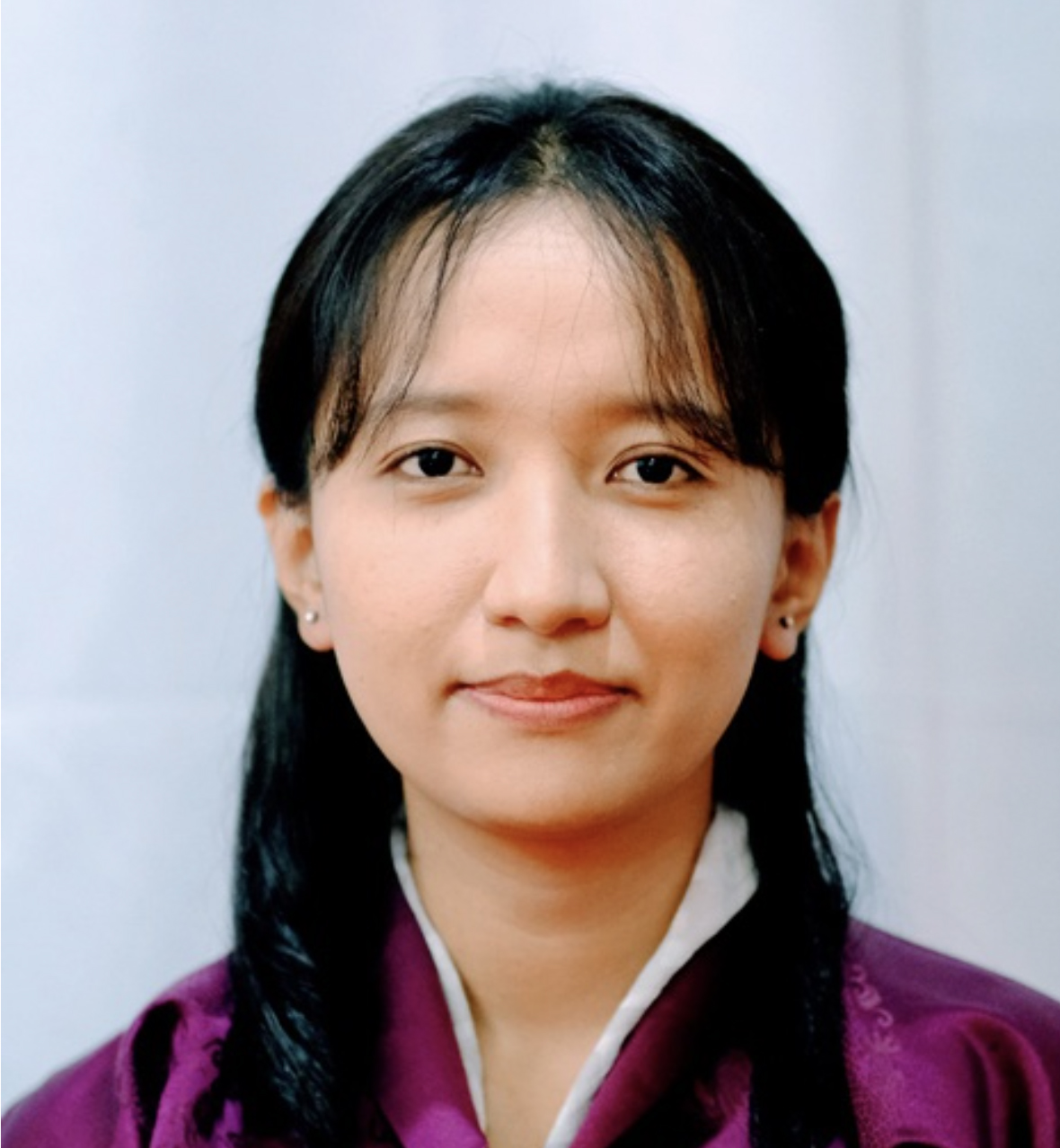
Pema Yangden
Associate Lecturer
Ms. Pema Yangden is an Associate Lecturer at the School of Computing, GCIT. She holds a Master's degree in Information Technology from IIIT, Hyderabad, and is particularly interested in exploring areas of Artificial Intelligence and Data Science.
Robotic Process Automation (RPA)
Productivity
Information Design & Data Visualisation
Productivity
Generative AI
Productivity
Building Agentic AI Using Open Source Models
Productivity
Visual Design
Productivity
AI Integration In Web Development
Productivity
YOU MIGHT ALSO BE INTERESTED IN
Technical
Gain hands-on expertise in the latest technologies through comprehensive training. This program equips you for success in IT, engineering, and digital solutions with cutting-edge modules and practical experience.
Read More
Management
Develop leadership and management skills to handle teams, projects, and organizations. Focusing on strategic planning and organizational behavior, this program provides the tools needed to lead confidently and drive success.
Read More
At GCIT, we prepare Bhutan's future IT leaders with innovative programs and hands-on experience. Our CETA arm focuses on upskilling professionals in productivity, technology, and management to support Bhutan's Digital Transformation.
Less Training More Application